
Chain of Responsibility
Loading manager duties under Chain of Responsibility
Under the Heavy Vehicle National Law, a loading manager is a person managing premises where five or more heavy vehicles are loaded or unloaded each day. A loading manager is a party in the Chain of Responsibility and has a primary duty to ensure, so far as is reasonably practicable, the safety of their transport activities.
This page is general information, not legal advice. Duties under the Heavy Vehicle National Law depend on what your organisation does and how. Check yours with a qualified adviser and the NHVR's published guidance.
Are you a loading manager?
The law looks at what you do, not your job title. If you manage a distribution centre, a depot, a construction site or a dock where five or more heavy vehicles are loaded or unloaded each day, you are likely to be a loading manager, even if you never drive or own a truck.
Most premises perform more than one function. A site that receives deliveries is a consignee. Its staff who take goods off the truck are unloaders. If it sends goods out, it is a consignor and a loader as well.
| If your organisation is | The HVNL calls you |
|---|---|
| Employing a heavy vehicle driver | Employer |
| Engaging a self-employed driver under a contract for services | Prime contractor |
| Directing the control and use of a heavy vehicle | Operator |
| Scheduling the transport of goods or passengers, or a driver's work and rest hours | Scheduler |
| Consigning goods for transport by a heavy vehicle | Consignor |
| Receiving goods delivered by a heavy vehicle | Consignee |
| Packing or assembling goods for transport | Packer |
| Managing premises where five or more heavy vehicles are loaded or unloaded each day | Loading manager |
| Loading a heavy vehicle | Loader |
| Unloading a heavy vehicle | Unloader |
Descriptions follow the NHVR's regulatory advice on the primary duty. The full definitions are in the Heavy Vehicle National Law.
What the primary duty means for premises
- It covers your transport activities, which include all activities and business processes associated with the use of a heavy vehicle on a road. For premises that includes loading, unloading, scheduling and how vehicles are received.
- So far as is reasonably practicable is a question of proportion: what should be done, weighing up how likely harm is and how serious it would be.
- It is not enough to assume the other parties are meeting their duty. The NHVR says so directly.
- You remain a party when the work is contracted or subcontracted out.
- Known hazards, risks and controls should be communicated to the other parties involved.
Risks a loading manager can influence
- Loading. Loads that are improperly loaded or restrained affect the vehicle on the road. Mass, dimension and restraint start at your premises.
- Time. Queues and slow turnarounds eat into a driver's work hours. Delay at your site can become fatigue or speed pressure after the vehicle leaves.
- Scheduling. Delivery windows that cannot be met safely put pressure on drivers and operators.
- Vehicle condition. Staff who see an obviously unsafe vehicle and load it anyway have missed a chance to act.
- Site layout. Access, turning and waiting areas that push heavy vehicles into conflict with other traffic or pedestrians.
The records that evidence it
If you are asked what your premises did to manage these risks, the answer has to be on record. These are the records that carry the most weight.
- Arrival and departure times for every heavy vehicle, which show how long vehicles waited.
- Vehicle identity and registration status for each visit.
- What was checked at the gate and on the dock, and the result.
- Vehicles that were refused, held or rectified, and who decided.
- What was communicated to operators and drivers about your site's requirements.
- How often the records are reviewed, and by whom.
Executives have their own duty
Under section 26D of the Heavy Vehicle National Law, an executive must exercise due diligence to ensure the business complies with its primary duty. In practice that means executives need to be able to see that the controls at their premises exist and are working, which is another reason the records matter.
How SiteInspector helps loading managers
- Licence plate recognition logs every vehicle entering and leaving, with time, direction and plate images.
- Each plate is matched against your vehicle registry, with alerts for unregistered, expired or blacklisted vehicles.
- Digital gate check inspections follow a guided workflow: vehicle and driver, accreditation, equipment checklist, driver certification, route and notes, then review and submit.
- Alerts carry an acknowledgement workflow that records who responded and when.
- Records from every site sit in one place, with role-based access.
Common questions
Who is a loading manager under the HVNL?
The NHVR describes a loading manager as a person managing premises where five or more heavy vehicles are loaded or unloaded each day. The role is defined by what the person does, not by their job title. The full definition is in the Heavy Vehicle National Law.
Does Chain of Responsibility apply if we only receive deliveries?
Yes. Receiving goods delivered by a heavy vehicle makes you a consignee, and unloading the vehicle makes you an unloader. Both are parties in the Chain of Responsibility with the same primary duty.
Is a loading manager responsible for what the driver does?
The primary duty is about your own transport activities and the risks you can influence. You are not generally answerable for everything another party does, but you must be able to show what you did about the risks within your control, and the NHVR says it is not sufficient to assume other parties are meeting their duty.
What are the penalties for breaching the primary duty?
Penalties depend on the category of offence. The most serious category carries very large maximum fines for corporations and can include imprisonment for individuals. The amounts are indexed each July, so check the NHVR's published figures for the current maximums.
Do we still have duties if a contractor runs our dock?
Yes. The NHVR's guidance is that a party remains a party in the Chain of Responsibility even when its transport activities are contracted or subcontracted.
Site compliance in the field
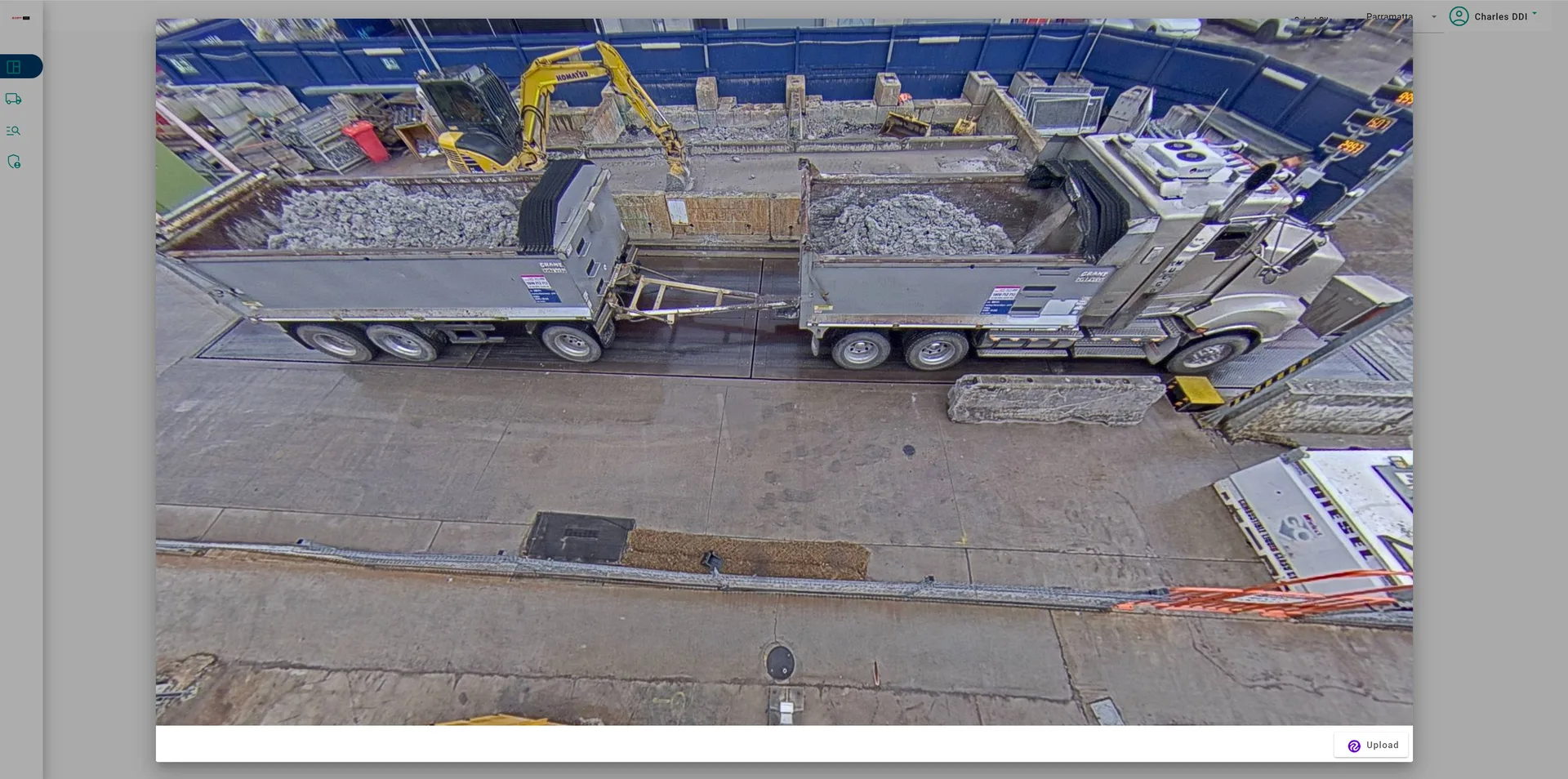
See how infrastructure and construction teams use SiteInspector to digitise vehicle inspections and Chain of Responsibility checks.

Ready to Start Your Automation Journey?
Our team is ready to discuss how our AI solutions can address your specific business challenges.
sales@ddilabs.ai
Location
Sydney, Melbourne, Brisbane