
Chain of Responsibility
Chain of Responsibility for construction sites
A construction site is usually a party in the Chain of Responsibility several times over. It receives goods, loads and unloads vehicles, schedules deliveries and often manages premises where five or more heavy vehicles are handled a day. Each of those functions carries the primary duty under the Heavy Vehicle National Law.
This page is general information, not legal advice. Duties under the Heavy Vehicle National Law depend on what your organisation does and how. Check yours with a qualified adviser and the NHVR's published guidance.
Is a principal contractor a party in the chain?
Principal contractor is a work health and safety term. It is not one of the ten parties named in the Heavy Vehicle National Law. The similar-sounding prime contractor in the HVNL means something narrower: a person who engages a self-employed driver under a contract for services.
What makes a construction business a party in the chain is what it does. On most projects the principal contractor, or the contractor running the site, performs several of the functions below.
| What the site does | CoR function |
|---|---|
| Takes delivery of materials, plant and equipment | Consignee |
| Unloads delivery vehicles | Unloader |
| Loads spoil, waste or plant onto vehicles leaving the site | Loader |
| Arranges for spoil, waste or materials to be taken away | Consignor |
| Sets delivery windows and booking slots | Scheduler |
| Runs a site where five or more heavy vehicles are loaded or unloaded each day | Loading manager |
| Engages owner-drivers directly | Prime contractor |
Which functions apply depends on how your project is set up. A subcontractor can hold some of them, but the NHVR's guidance is that a party remains a party even when its transport activities are contracted out.
Where construction sites create transport risk
- Spoil and bulk loads. Loading sets the mass on each axle group and whether the load is covered and contained. Those are loader issues before they are driver issues.
- Delivery windows. Tight slots, road occupancy limits and curfews can push drivers to speed or to keep going when they should rest.
- Queuing. Vehicles held on public roads waiting for a gate create risk for other road users and use up drivers' hours.
- Site access. Entries that force heavy vehicles to turn across footpaths and cycle lanes put vulnerable road users in the way.
- Subcontracted haulage. Several layers of subcontracting make it harder to know which operator and driver turned up.
Work health and safety law still applies
Chain of Responsibility does not replace work health and safety duties. WHS law covers the workplace, including traffic management inside the site. The Heavy Vehicle National Law covers transport activities associated with the use of a heavy vehicle on a road. The same activity, such as loading a spoil truck, can fall under both, and the NHVR publishes regulatory advice on how the two interact.
What to record at a construction site
- Every heavy vehicle that entered and left, with times.
- Registration status and operator for each vehicle.
- The gate inspection result, including load cover and restraint.
- Vehicles turned away or held, and why.
- The delivery booking each vehicle arrived against.
- For projects that have adopted CLOCS-A, the accreditation level of each operator.
How it works on a major project
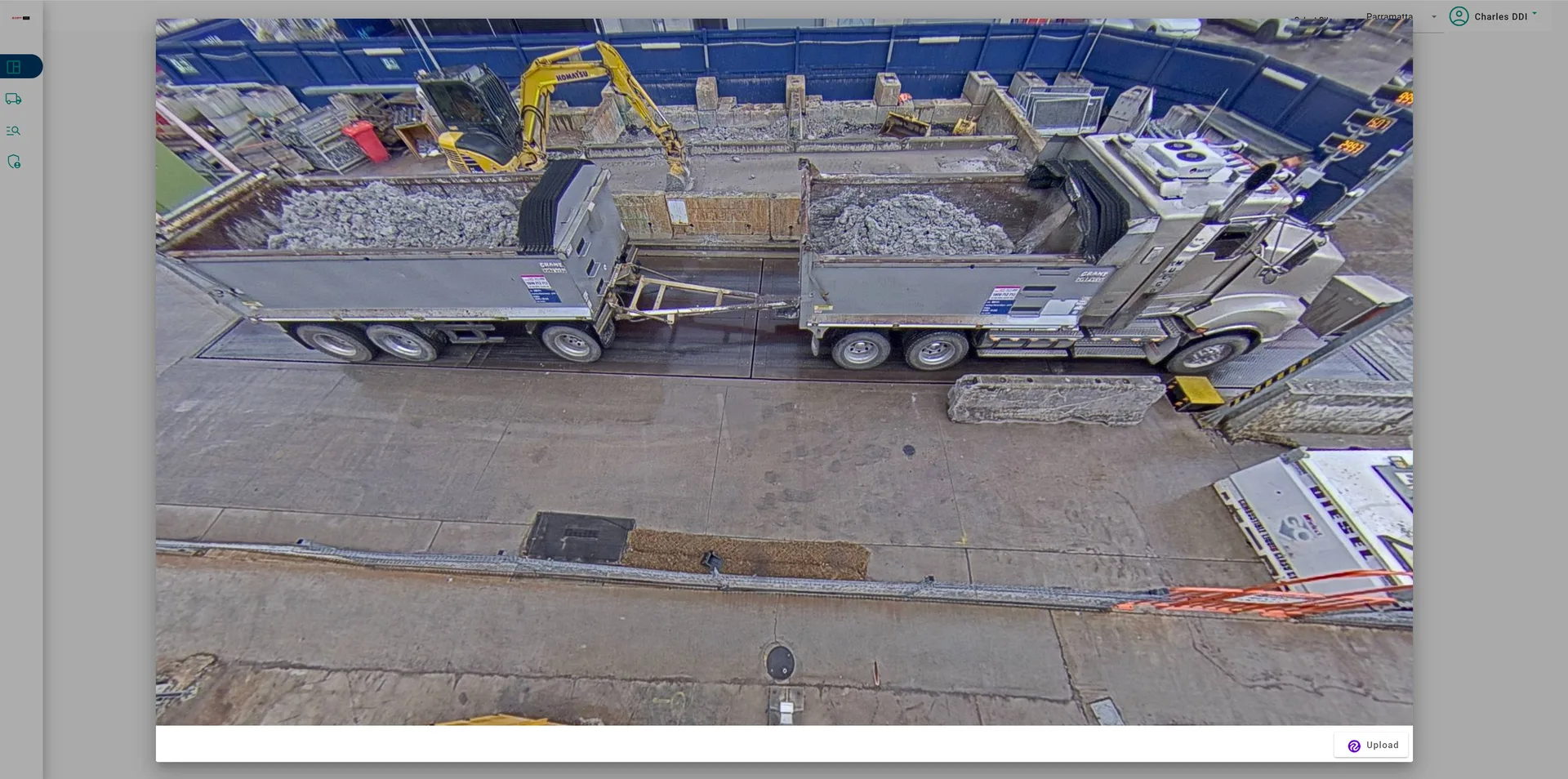
Gamuda Australia uses SiteInspector on the Sydney Metro West Western Tunnelling Package to digitise heavy vehicle inspection and Chain of Responsibility checks. The deployment covers seven construction sites and has recorded more than 180,000 events.
- Automated licence plate recognition at each gate.
- AI-assisted checks of load, height, tarp and restraint.
- Integration with third-party permit systems.
- Central dashboards across all sites.
Common questions
Does Chain of Responsibility apply to construction sites?
Yes. A construction site that receives, loads, unloads or schedules heavy vehicles performs functions named in the Heavy Vehicle National Law, such as consignee, loader, unloader, scheduler and loading manager. Each carries the primary duty.
Is the principal contractor a party in the Chain of Responsibility?
Not by that title. Principal contractor is a work health and safety term. A principal contractor is a party in the chain when it performs one of the ten functions in the Heavy Vehicle National Law, which most do by receiving, loading, unloading or scheduling heavy vehicles.
Who is responsible for an overloaded spoil truck?
More than one party can be. Loading the vehicle is a loader function, arranging the removal is a consignor function, and the operator and driver have their own obligations. Each party's duty relates to the risks it can influence, and the site loading the truck plainly influences mass.
Can we pass Chain of Responsibility duties to a subcontractor?
You can contract out the work, but not the duty. The NHVR's guidance is that a party remains a party in the Chain of Responsibility even when its transport activities are contracted or subcontracted, and that it is not sufficient to assume other parties are meeting their duty.
How does CLOCS-A relate to Chain of Responsibility on a construction project?
Chain of Responsibility is a legal duty under the Heavy Vehicle National Law. CLOCS-A is a voluntary standard for construction logistics that a project may adopt. Both rely on knowing which vehicles and drivers came to site and in what condition.
Site compliance in the field
See how infrastructure and construction teams use SiteInspector to digitise vehicle inspections and Chain of Responsibility checks.

Ready to Start Your Automation Journey?
Our team is ready to discuss how our AI solutions can address your specific business challenges.
sales@ddilabs.ai
Location
Sydney, Melbourne, Brisbane