
Parking enforcement
How to stop unauthorised parking in a private car park
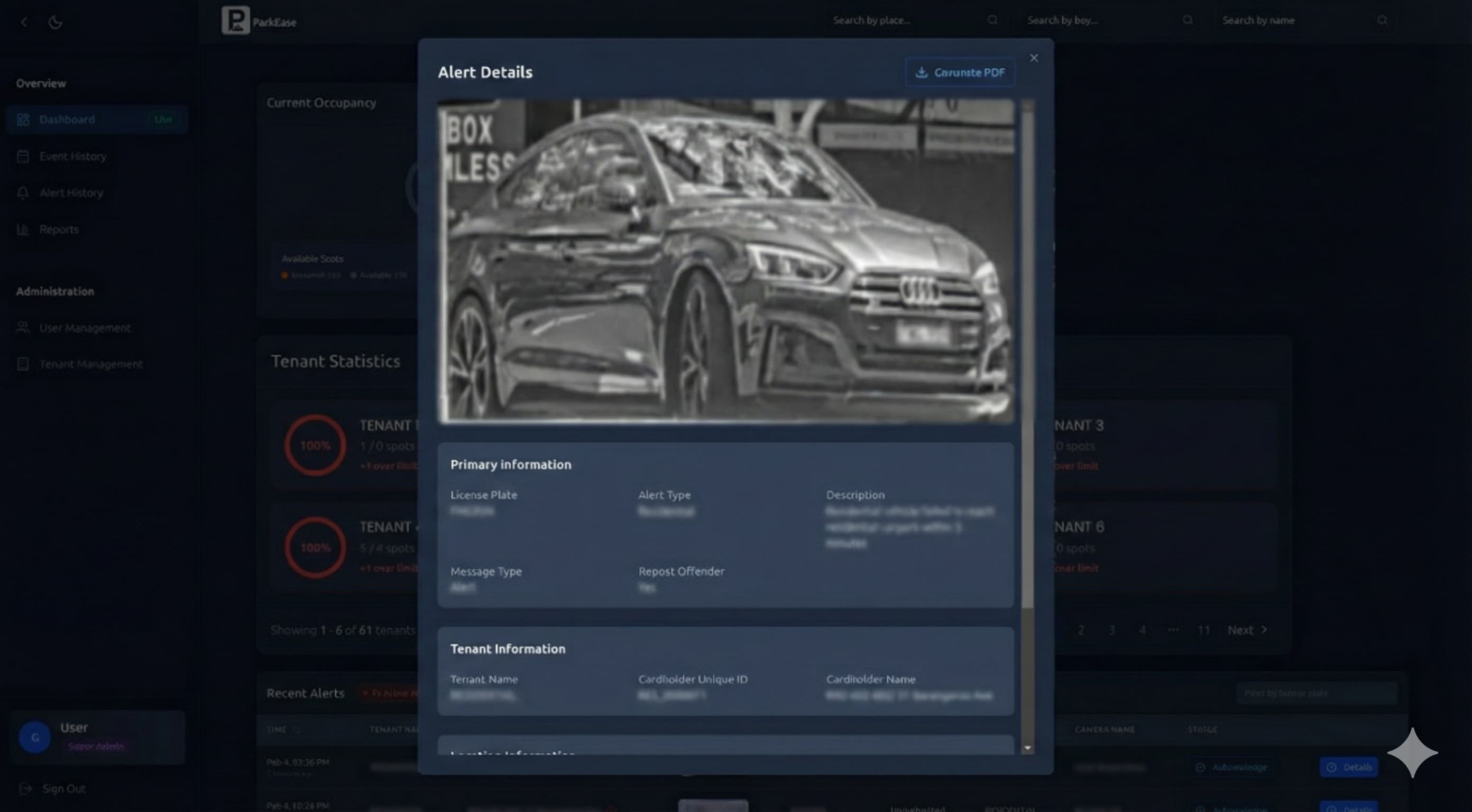
Unauthorised parking in a private car park is solved in three steps: know which vehicles are allowed, detect the ones that are not as they arrive, and keep evidence of every event. ParkEase matches each plate against bookings and rules, alerts your team the moment an unauthorised vehicle parks, and attaches a photo to every alert.
This page is about detecting and preventing unauthorised parking. What you may lawfully do to a vehicle parked without permission, such as towing, clamping or charging a fee, varies by state and territory and by your lease. Get advice before you act.
Why signs and patrols are not enough
- A sign tells people the rule. It does not tell you who broke it.
- A patrol finds a vehicle hours after it arrived, with no record of when.
- Without a list of who is allowed, nobody can say for certain that a vehicle is not.
- By the time a tenant complains, the vehicle has usually gone.
Where unauthorised vehicles come from
Most of these are people who were once entitled to be there. That is why an up-to-date list matters more than a bigger sign.
- Former tenants and staff whose access was never removed.
- Tenants using more bays than their allocation.
- Visitors who stay long after their meeting.
- Contractors who were let in once and kept coming back.
- Members of the public who have worked out that nobody checks.
Detect, record, respond
| Step | What it takes | What ParkEase provides |
|---|---|---|
| Know who is allowed | A current list of plates, bookings and allocations | Tenant and user management, with tenants keeping their own plates current |
| Detect on arrival | Every plate read at entry and checked against the list | ANPR matching of each vehicle to bookings and facility rules |
| Tell someone | An alert to a person who can act | Instant alerts for unauthorised parking and allocation breaches |
| Keep evidence | A photo, a time and the rule that was broken | Photo evidence attached to every alert, and a full vehicle event history |
| Show it was handled | A record of who responded and when | One-click acknowledgement with a full audit trail |
Prevent before you enforce
- Move from open access to bookings, so every bay in use has a reason.
- Let tenants manage their own plate lists, so leavers are removed by the people who know they have left.
- Link plates to the barrier, so vehicles that are not on any list do not get in.
- Set allocation limits and alerts, so a tenant sees its own overuse before a neighbour complains.
- Publish the rules. People comply more readily with a policy they can read.
What good evidence looks like
Whatever action you take, and whoever you take it with, this is the record you will be asked for.
- The plate, read by the camera and visible in the image.
- The time the vehicle entered and the time it left.
- Which rule was breached: no booking, wrong bay, over allocation or overstay.
- Whether this vehicle has done it before.
- Who acknowledged the alert and what they did.
Common questions
How do I stop people parking in my private car park?
Keep a current list of the vehicles that are allowed, check every vehicle against it on arrival, and act on the exceptions. Number plate recognition does the checking automatically, and linking it to a barrier stops unlisted vehicles getting in.
Can I fine or tow a vehicle parked without permission?
That depends on the state or territory, the type of property and your lease, and the rules differ widely. This page does not cover it. Get legal advice before towing, clamping or charging anyone.
How does ANPR detect unauthorised parking?
Cameras read each vehicle's number plate as it enters. The plate is compared with bookings, permits and allocations. A plate with no valid entitlement is flagged immediately, with an image, instead of being discovered later by a patrol.
What evidence should we keep of unauthorised parking?
Keep the plate image, entry and exit times, the rule that was breached and a record of who responded. ParkEase attaches photo evidence to every alert and logs acknowledgements with a full audit trail.
How do we deal with repeat offenders?
Start with the record. If the same plate appears repeatedly, you can raise it with the tenant or person it belongs to, with dates and photos. Most repeat problems stop once the person knows the car park can see them.
Ready to Start Your Automation Journey?
Our team is ready to discuss how our AI solutions can address your specific business challenges.
sales@ddilabs.ai
Location
Sydney, Melbourne, Brisbane