
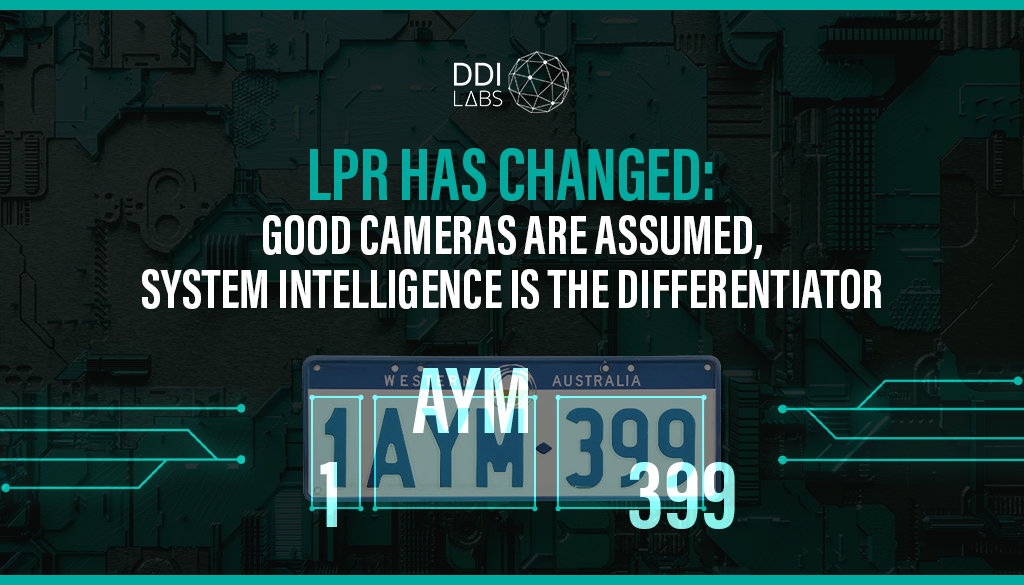
LPR has changed: good cameras are assumed, system intelligence is the differentiator
(Why setup, software, and integration now matter most)
LPR (licence or number plate recognition, also called ANPR) is not new. But the way it succeeds, or fails, has definitely changed.
These days, if you buy a decent LPR camera from a reputable brand and install it properly, you will usually get a "good enough" image. That is the baseline.
The real difference now is what happens after the image is captured:
- how the system is configured
- how it handles messy real-world conditions
- how it plugs into your site's rules (and does not fall over)
- and whether the output turns into useful actions, not just plate reads
Quick context: where I'm coming from
I'm not writing this from a lab. It's from delivering LPR in the real world.
- 12+ years in parking tech, where LPR is a core part of the stack (ITSL (now Orikan), DESIGNA, Wilson Parking, SKIDATA)
- 4+ years at a leading security and analytics integrator, focused on video analytics (LPR, face recognition, people counting, vision AI)
- 8 years at DDI as co-founder and director. DDI specialises in AI and automation, using LPR for parking, loading docks, construction sites, heavy vehicle monitoring and compliance
So this is not "camera theory". It is what actually makes projects work.
What LPR is actually doing
At its simplest, LPR is a system that spots a number plate, reads it, and turns it into data you can use.
You will see it everywhere:
- parking (gates, free-flow, enforcement, payments)
- security and access control
- loading docks and logistics sites
- councils and compliance
- construction sites
- heavy vehicles and rule enforcement
And while it looks simple ("read the plate"), the reality is that sites are chaotic.
Good cameras are assumed, but they are not the whole story
Let's be clear. Hardware still matters.
If the image is:
- too dark
- too blurry
- full of glare
- bad plate angle
then no software can magically read what is not there.
But here is the shift. For many sites, the camera decision is no longer the main "make or break" moment. A lot of modern cameras can hit the baseline.
What now matters more is:
- where the camera is placed
- how it is aimed
- how it is tuned for the site
- and whether the wider system knows what to do with the result
Think of it like this.
A good camera is the ticket to enter the game.
The system design decides who wins.
Where LPR performance really comes from now
This is the part that is often missed.
1) Setup beats spec sheets
In real deployments, the biggest gains usually come from basic things like:
- getting the camera height and angle right
- making sure plates are large enough in the image
- avoiding headlight glare at night
- not trying to read plates at impossible speeds or distances
- keeping the view clean (dust, spiders, bad weather, vibration)
You can spend more on hardware and still lose here.
2) Tuning and rules are critical
A lot of "bad LPR" is actually bad settings, or bad expectations.
Examples:
- confidence thresholds set too high (misses reads)
- thresholds set too low (false positives everywhere)
- wrong plate formats enabled (more junk matches)
- no handling for common edge cases (dirty plates, trailers, odd fonts)
This is why LPR is not "install and forget". It needs a bit of care.
3) Integration is the real battleground
This is the part most people underestimate.
A camera can read plates all day, but if the downstream system is messy, you still get a bad outcome.
Common failure points:
- the gate logic does not match the real operation
- whitelists and blacklists are out of sync
- payments do not reconcile properly
- there is no clean exception flow (what happens when it does not read?)
- operators do not trust the system, so they work around it
- reporting is unclear, so problems hide for months
In parking, this is huge. LPR is not just "recognition". It is directly tied to revenue, customer experience, enforcement, and compliance.
This is also where VLM and LLM integration starts to matter.
Instead of treating an LPR read as the final truth, you can add a smarter "reasoning layer" on top that checks context before you trigger an action. For example:
- "Does the plate match the vehicle type we expect?"
- "Is this actually a real plate, or a reflection, sign, or noise?"
- "Is this a normal event, or does it look like an exception?"
At DDI, this is how we help reduce false positives and keep alerts accurate, because a noisy alert stream is worse than no alerts at all.
So what is the differentiator now? System intelligence
When I say "system intelligence," I do not mean a buzzword. I mean:
- how the site is designed (lanes, lighting, signage, speed control)
- how exceptions are handled (manual review, second reads, escalation)
- how reads turn into actions (open gate, start session, raise alert, create a task)
- how you keep performance stable over time (not just day one accuracy)
That is what separates "it works in a demo" from "it works every day."
The next phase: LPR as one signal in a bigger vision stack
LPR is increasingly one input among many, paired with broader analytics to add context and reduce operator load. In the near term, this looks like:
- combining plate reads with vehicle attributes and scene context
- better anomaly detection and exception handling
- operator-friendly search and explanation layers
Why DDI Labs is positioned for this era
Because modern LPR success is not a camera shootout. It is:
- calibration expertise
- contextual analytics
- platform-level integration
- operational workflows that work in the real world
Good hardware is required. But intelligence, integration, and specialist delivery are what make LPR systems perform at scale.
The future is not just "better OCR". It is VLM and LLM layers sitting above typical LPR engines, adding context, handling exceptions, and making the system easier for operators to use. That shift has already started, and the next generation is not far away. At DDI, we are building and optimising our stack with that direction in mind.
Want to talk LPR outcomes, not just plate reads?
Contact DDI Labs to discuss how our LPR solutions can deliver real-world performance for your site.
Email Us TodayLooking for more information?
Keep exploring related pages on this topic.
Interested in Our Solutions?
Contact us today to learn how our smart tools can help your business improve safety and compliance.
Book a Demo